
Description: Discover how Mini Highland cows for small farms can fit into a hobby farm or homestead. Learn about land, fencing, feeding, shelter, water, care, and buying considerations.
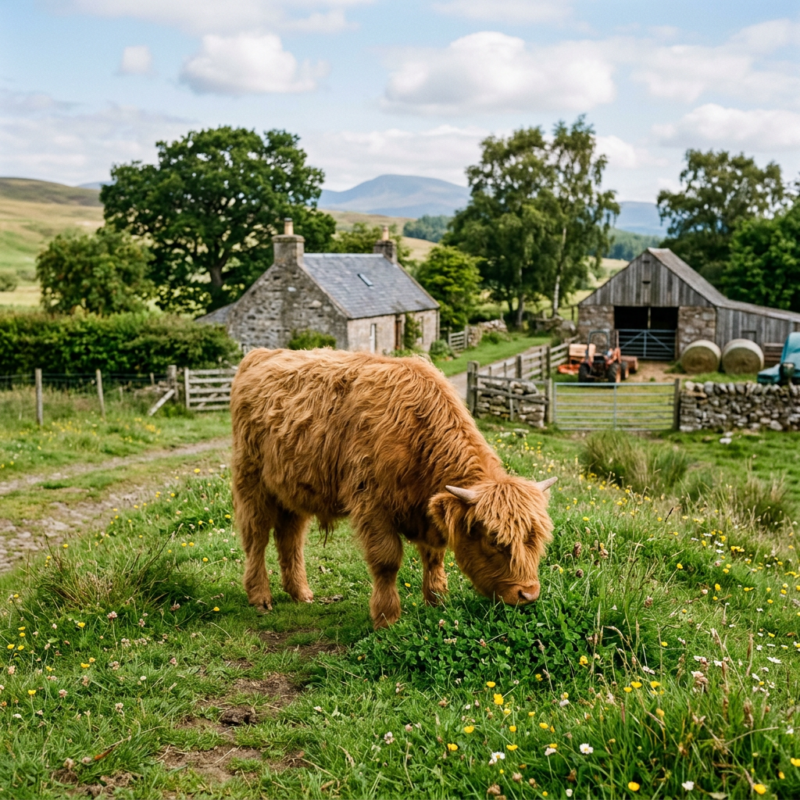
Why Are Mini Highland Cows Considered for Small Farms
Mini Highland cows for small farms have become an appealing option for people interested in keeping cattle on smaller properties, hobby farms, and homesteads. Their distinctive Highland appearance, long hair, and smaller size can make them attractive to owners who want cattle without operating a large commercial farm.
However, it should be remembered that a smaller cow is still livestock and must be provided with appropriate care. Therefore, the decision to purchase Mini Highland cattle should be based on the animal’s needs rather than appearance alone.
Before a Mini Highland cow is brought home, suitable pasture, fencing, shelter, clean water, feed, veterinary care, and safe transportation should be prepared.
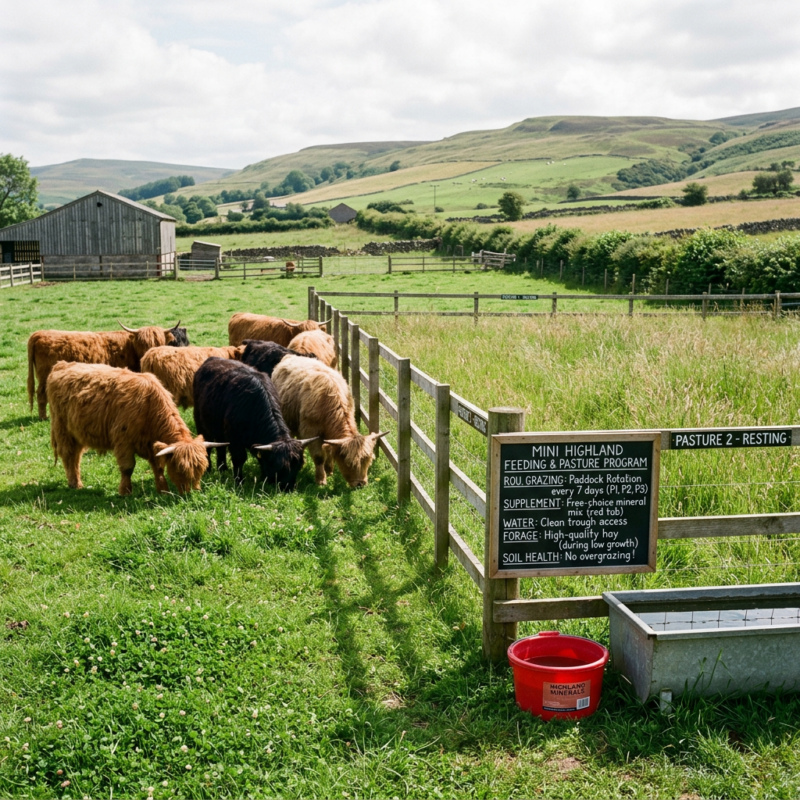
Proper pasture management should be planned before cattle are brought to a small farm.
What Should Be Prepared Before Mini Highland Cattle Arrive?
Although miniature Highland cattle for small acreage may be appealing to homesteaders, there is no single acreage figure that will be suitable for every farm. Pasture productivity varies significantly from one location to another.
For example, productive pasture may support animals differently from dry or poor-quality land. Consequently, stocking decisions should be based on local conditions and professional agricultural guidance.
Pasture management should also be planned. Grazing areas may need to be rotated, forage may need to be supplemented, and hay may be required when pasture growth is insufficient.
Fencing
Clean Water
A dependable source of clean water should also be available.
Water access should be checked regularly, and containers or watering systems should be kept clean. During periods of hot weather, water management becomes particularly important.
⸻Clean Water
A dependable source of clean water should also be available.
Water access should be checked regularly, and containers or watering systems should be kept clean. During periods of hot weather, water management becomes particularly important.
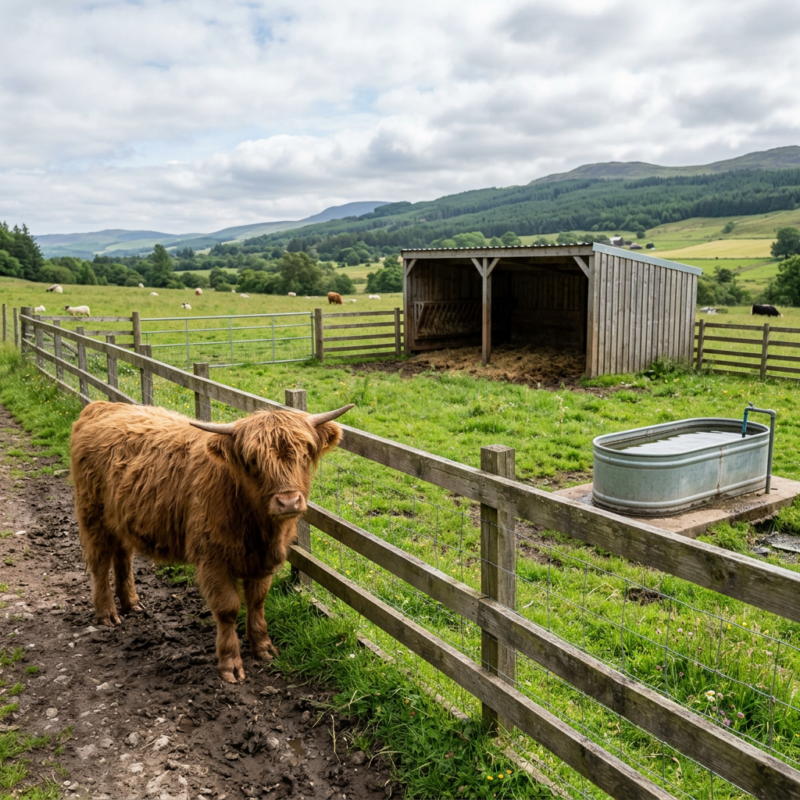
Fencing, shelter, pasture, and reliable water should be prepared before cattle arrive.
⸻
Once the animals have arrived, a consistent management routine should be established.
Pasture and Hay
Good-quality forage should form an important part of cattle management. Depending on pasture conditions, hay may also be provided.
However, feed requirements can vary according to age, body condition, size, pregnancy status, weather, forage quality, and other factors.
Mineral and Nutritional Needs
Moreover, appropriate minerals and other nutritional requirements should be considered. Supplements should not be provided randomly because excessive or inadequate mineral intake can create problems.
Instead, the nutritional condition of the herd should be evaluated and an appropriate feeding program should be established.
Routine Observation
Mini Highland cattle should be observed regularly.
MiChanges in appetite, movement, behavior, body condition, or general appearance should be noticed early. As a result, potential health concerns can be discussed with a veterinarian before they become more serious.
Regular hoof care, parasite management, vaccination programs, and other preventive care should be determined with professional veterinary guidance.ni Highland cattle should be observed regularly.
Learn More About Mini Highland Cattle
How Can Mini Highland Cows Fit Into a Hobby Farm or Homestead?
For many owners, Mini Highland cows for homesteads are attractive because they can become part of a small-scale livestock operation.
However, several factors should be considered.
Space Should Be Managed Carefully
A small farm should not be overstocked simply because miniature cattle are being kept.
Instead, the carrying capacity of the land should be assessed. Pasture condition should be monitored, and adjustments should be made when forage becomes limited.
Handling Facilities Should Be Provided
Safe handling facilities can make veterinary examinations, hoof care, transportation, and other livestock tasks easier.
Furthermore, animals should be accustomed to calm and appropriate handling. Good handling practices can help reduce unnecessary stress for both the cattle and the people caring for them.
Companionship and Herd Management
Cattle are social animals, so their social and management needs should be considered when deciding how many animals to keep.
Ultimately, the best setup will depend on the farm’s available resources, management goals, and ability to provide consistent care.
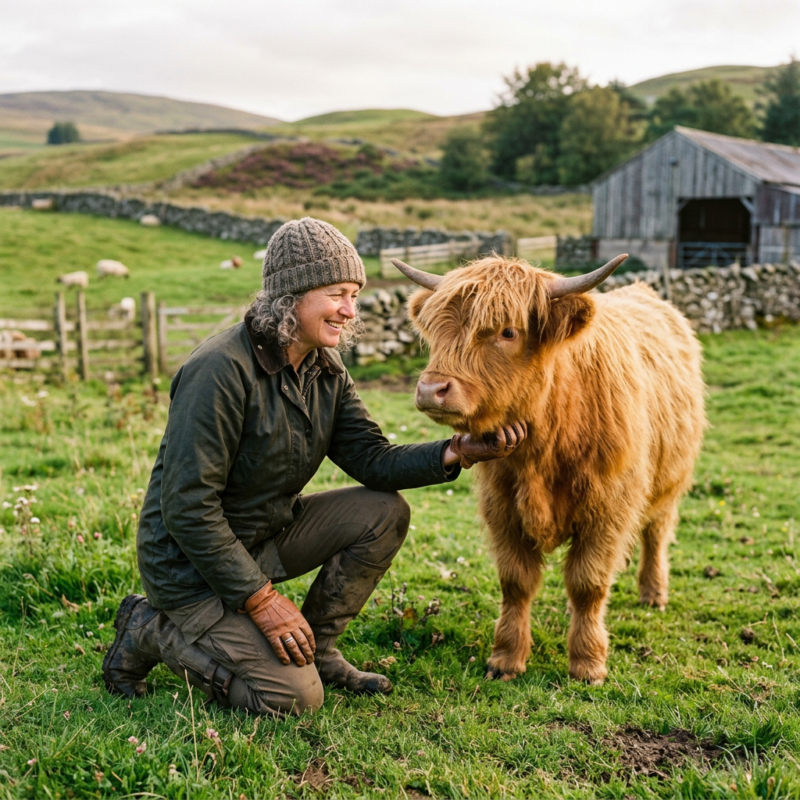
What Should You Check Before Buying Mini Highland Cattle?
Before purchasing Mini Highland cattle for small farms, prospective owners should ask questions and review the animal carefully.
Questions to Ask a Breeder
The following questions can be useful:
- What is the calf’s age and current weight?
- What feeding program is currently being used?
- What veterinary care has been provided?
- Are health records available?
- Has the animal been regularly handled?
- What is known about its parents and background?
- What transportation arrangements are available?
- What documents will accompany the animal?
- What care instructions should be followed after arrival?
Additionally, buyers should be cautious of listings that provide very little information about the animal’s history, health, or ownership.
View Available Mini Highland Cows and Calves
ransportation Requirements
Transportation requirements should also be confirmed before an animal is purchased.
For interstate movement in the United States, USDA APHIS explains that requirements can include animal identification and documentation, with requirements varying according to the animal and movement circumstances.
States can also impose additional requirements. Therefore, applicable requirements should be confirmed with the relevant state animal-health authority and veterinarian before transportation is arranged.
USDA APHIS — Interstate Animal Movement Requirements
USDA APHIS — Animal Disease Traceability
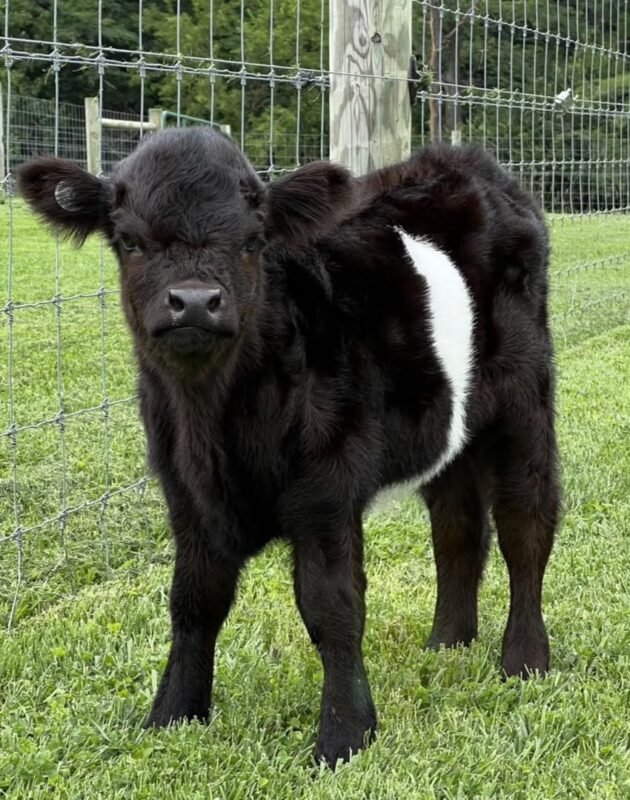
BUYING A MINI HIGHLAND CALF
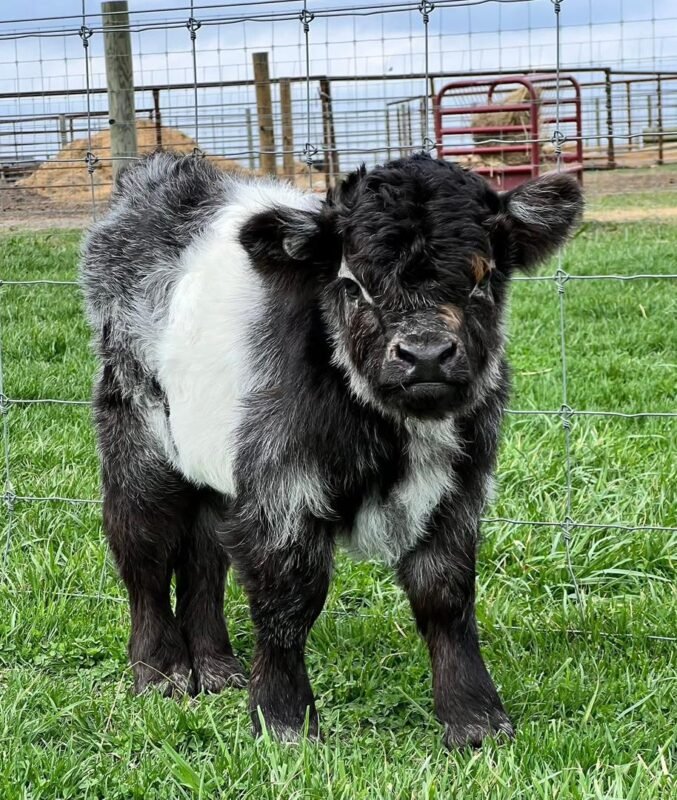
Final Thoughts: Are Mini Highland Cows Right for Your Small Farm?
In conclusion, Mini Highland cows for small farms can be considered by people who have carefully prepared their property and are ready to provide responsible livestock care.
However, the decision should not be made based only on the animals’ attractive appearance or smaller size. Instead, pasture capacity, fencing, shelter, water, nutrition, veterinary care, handling facilities, transportation, and local regulations should all be evaluated.
Furthermore, prospective owners should make sure that adequate time and resources will be available for the animals throughout the year.
If you are considering adding Mini Highland cows to a small farm, hobby farm, or homestead, the necessary preparation should be completed before the animals arrive.
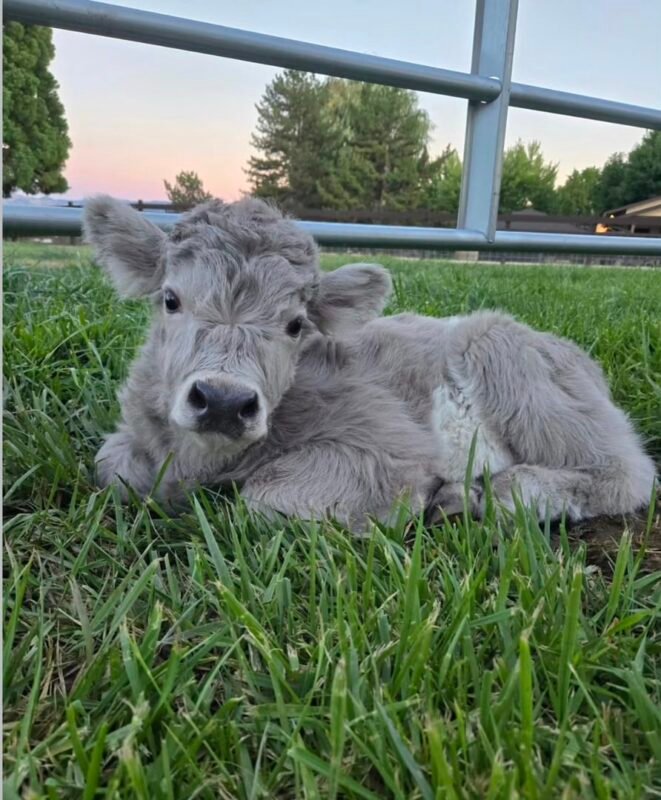
If you are looking for Mini Highland cows for small farms, you can explore the animals available through our website and contact us for additional information about individual animals.
Explore Available Mini Highland Cows
Contact Highland Mini Cows Breeder
Your next Mini Highland cow could be a wonderful addition to your farm—but the best choice is one that can be properly cared for and supported throughout its life.